Describe the symptom
Record meter movement, moisture, sound, temperature, odor, pressure, drainage, or pool-level behavior and when it occurs.
Pre-launch leak detection service information
Operator and exact coverage require verificationEvidence before repair
A six-stage process for moving from an unexplained symptom to a documented repair decision.
Record meter movement, moisture, sound, temperature, odor, pressure, drainage, or pool-level behavior and when it occurs.
Identify meters, valves, fixtures, buried routes, pools, equipment, drainage, irrigation, condensate, and property boundaries.
Use controlled water use and accessible isolation points to separate pressurized, drainage, pool, appliance, envelope, and past-moisture explanations.
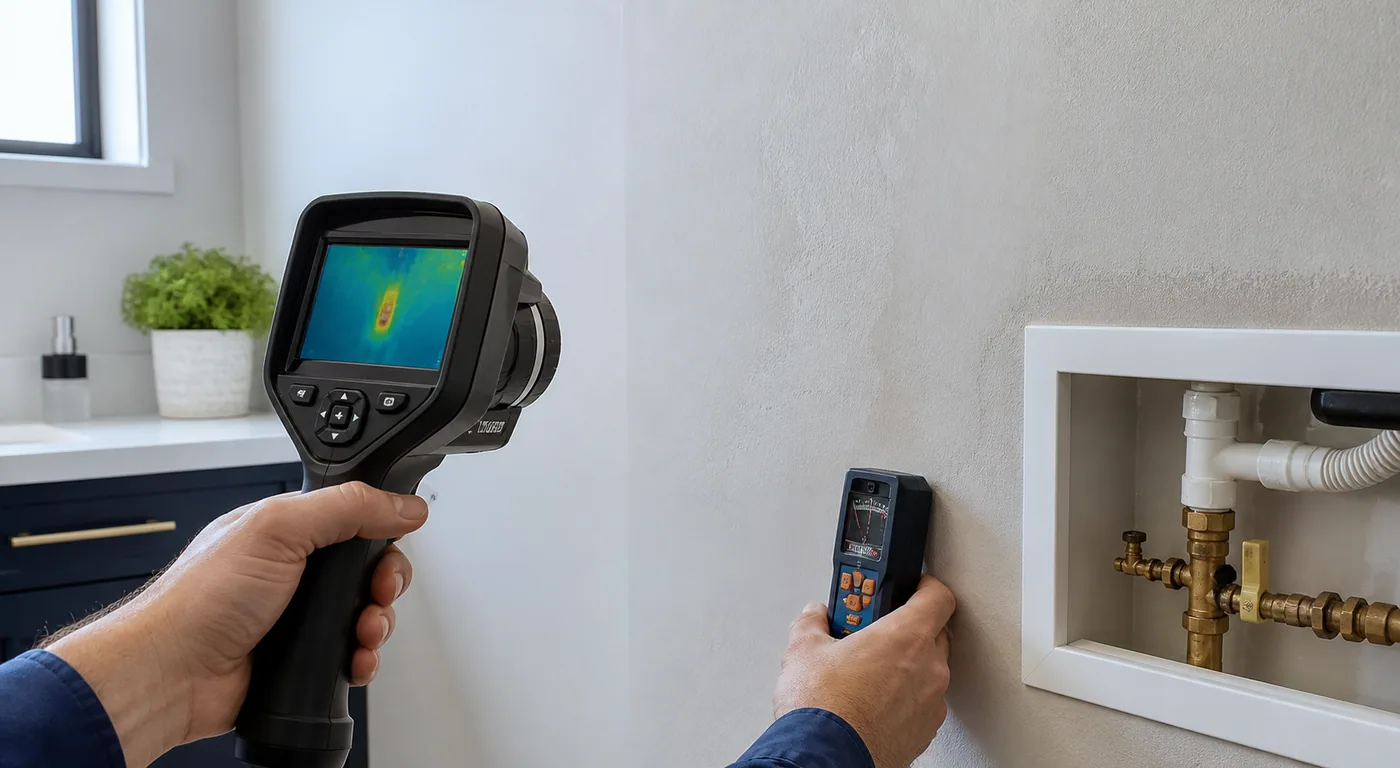
Apply the methods appropriate to the system and look for repeatable results rather than a single unexplained instrument reading.
Record the likely zone, evidence, test conditions, access limits, uncertainty, and the next step needed before repair.
Compare access, pipe repair, excavation, restoration, permits, drying, remediation, and utility coordination as separate authorized work.
Questions and decisions
Testing sequence, documentation, access, and uncertainty.
No. Tools are chosen after the symptom and system boundary are defined. Using every instrument can add time without improving evidence.
It should state the test conditions, observations, likely zone or system, limits, and the next step needed before repair.
Yes. Meter, pressure, line, fixture, commercial, and pool tests may require controlled water use, isolation, or equipment changes.
The property owner or authorized manager must approve access. Destructive access is outside this pre-launch detection scope unless separately contracted.
The result should explain the remaining possibilities and the most useful next test or access step rather than present an unsupported conclusion.
Prepare the service request
Share what changed, when it happens, the systems that may be involved, and any access or shutdown limits.
Request Leak Detection