Deer Park service guide
When this Deer Park detection scope may fit
Underground Water Leak Detection in Deer Park is intended to trace water loss along a buried service line or private yard piping before excavation is selected. The scope may fit when a meter runs with the building isolated, a lawn stays wet, pressure drops, or water surfaces between the meter and the structure.
Slab homes, apartments, schools, restaurants, offices, warehouses, and industrial facilities require different access and documentation plans. In this property mix, the request should identify the building type, meter arrangement, suspected route, affected zone, prior work, and who controls access.
Local conditions that can change the test sequence
Older service lines, industrial or fire-service boundaries, multiple meters, clay soil, and high-use facilities can complicate unexplained consumption. These conditions do not prove a leak, but they affect which competing sources must be removed and where instruments can produce useful readings.
How underground water leak detection is approached
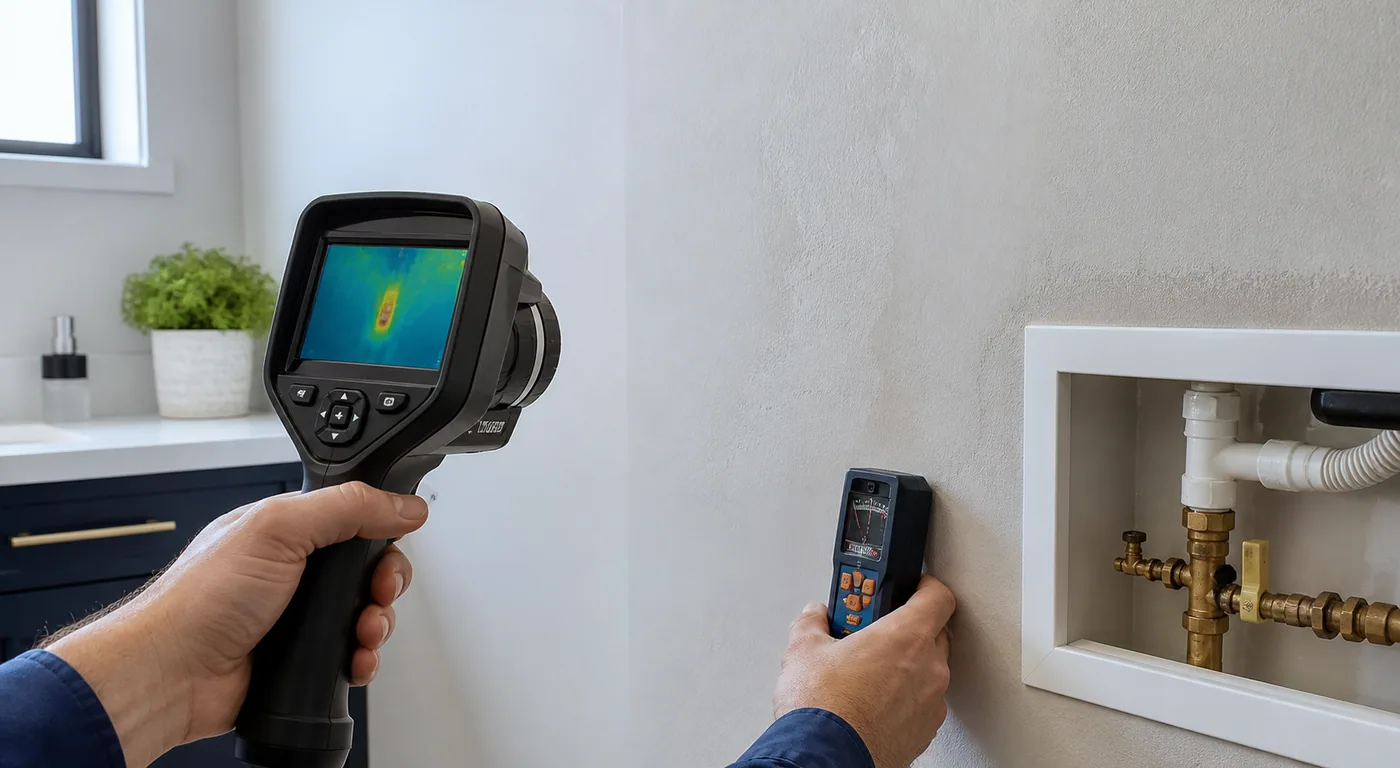
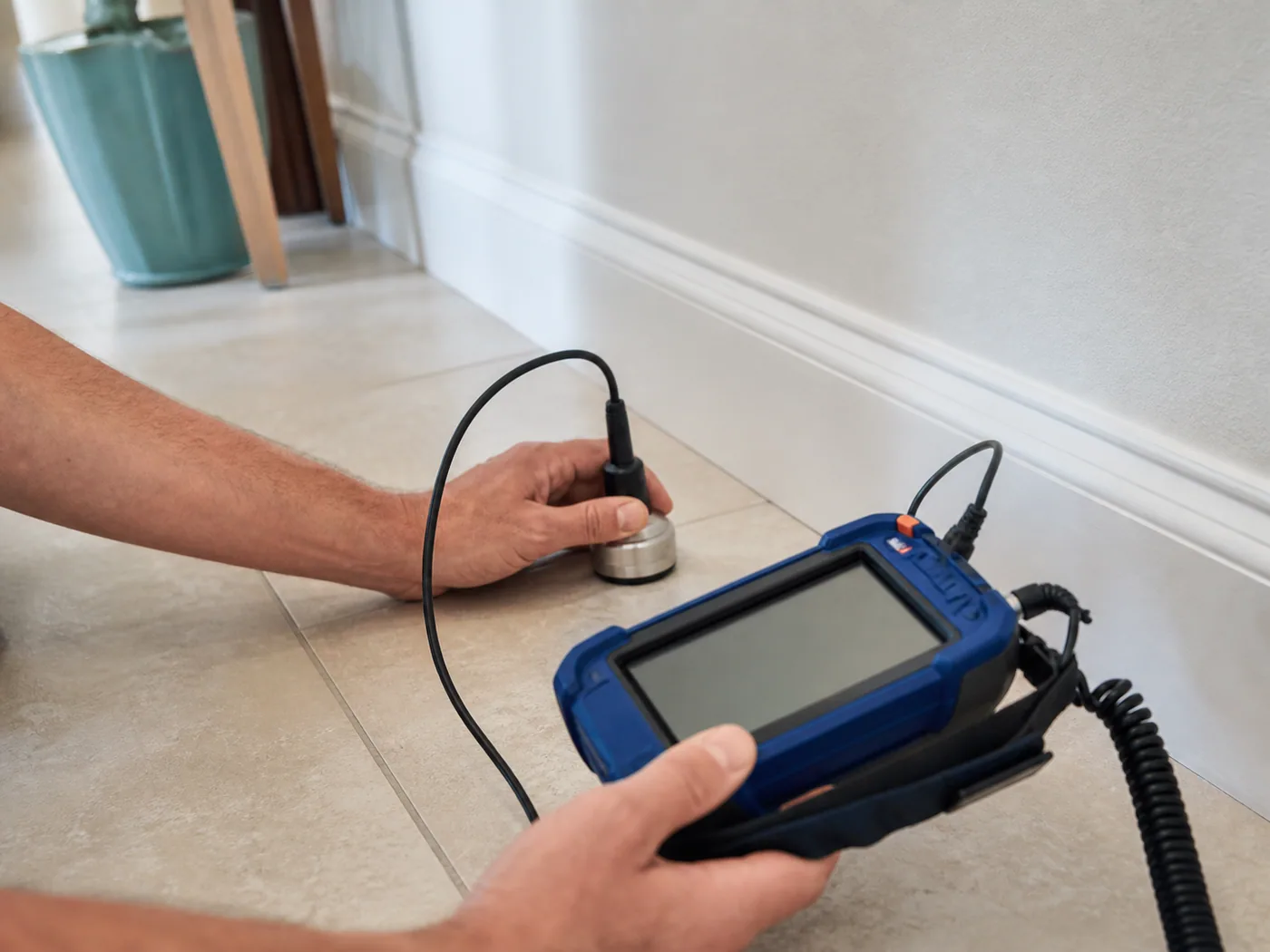
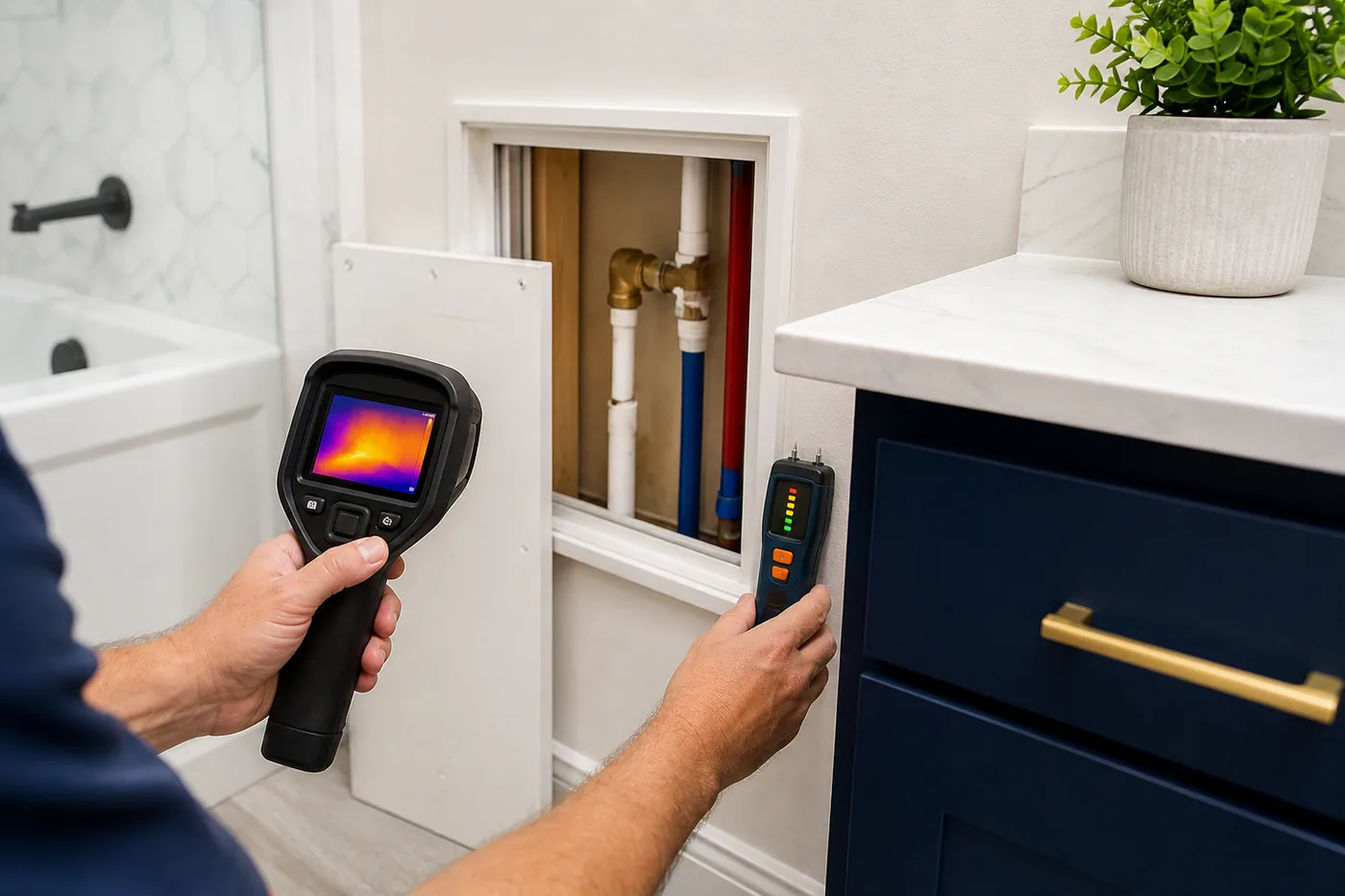
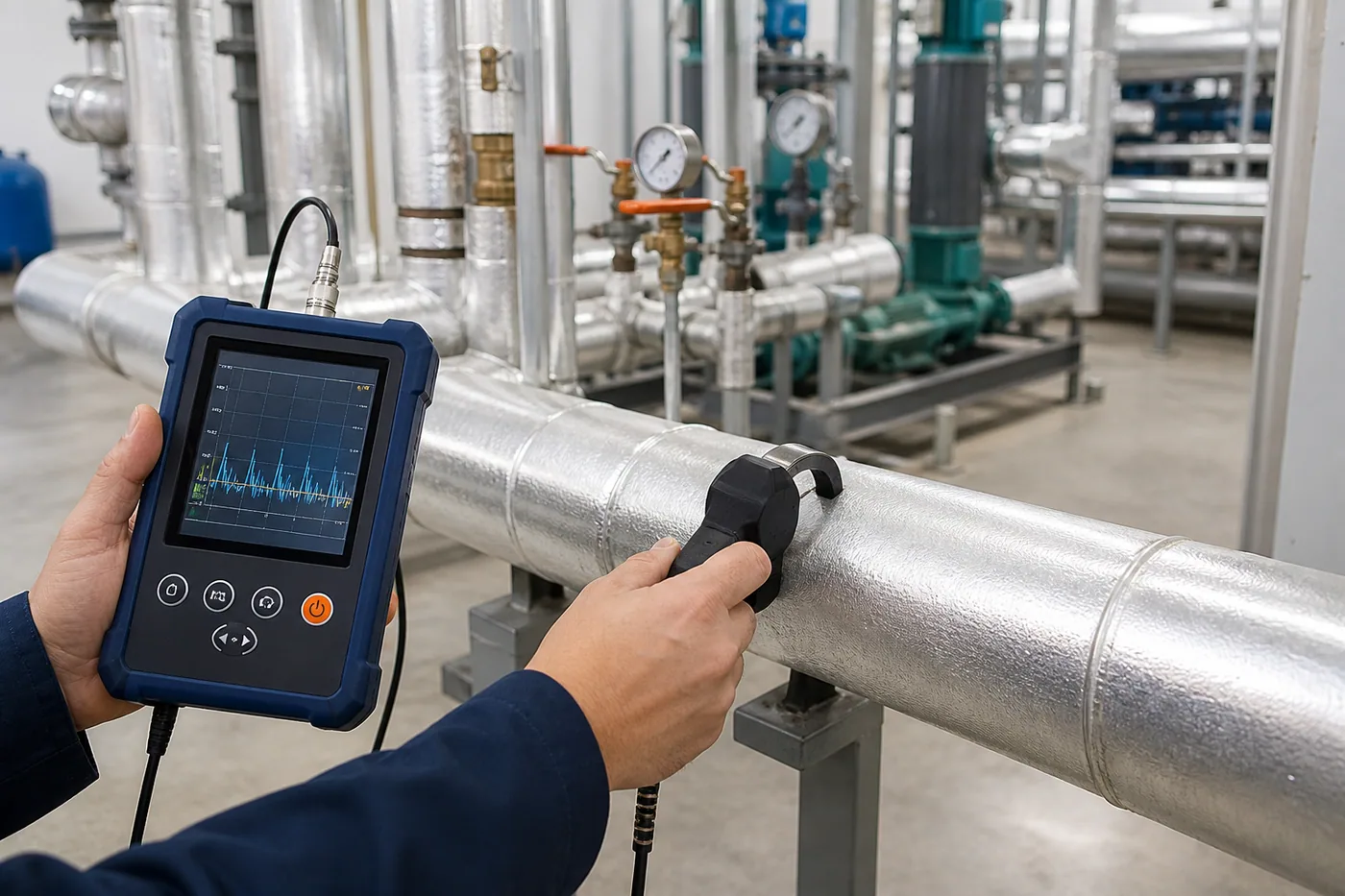
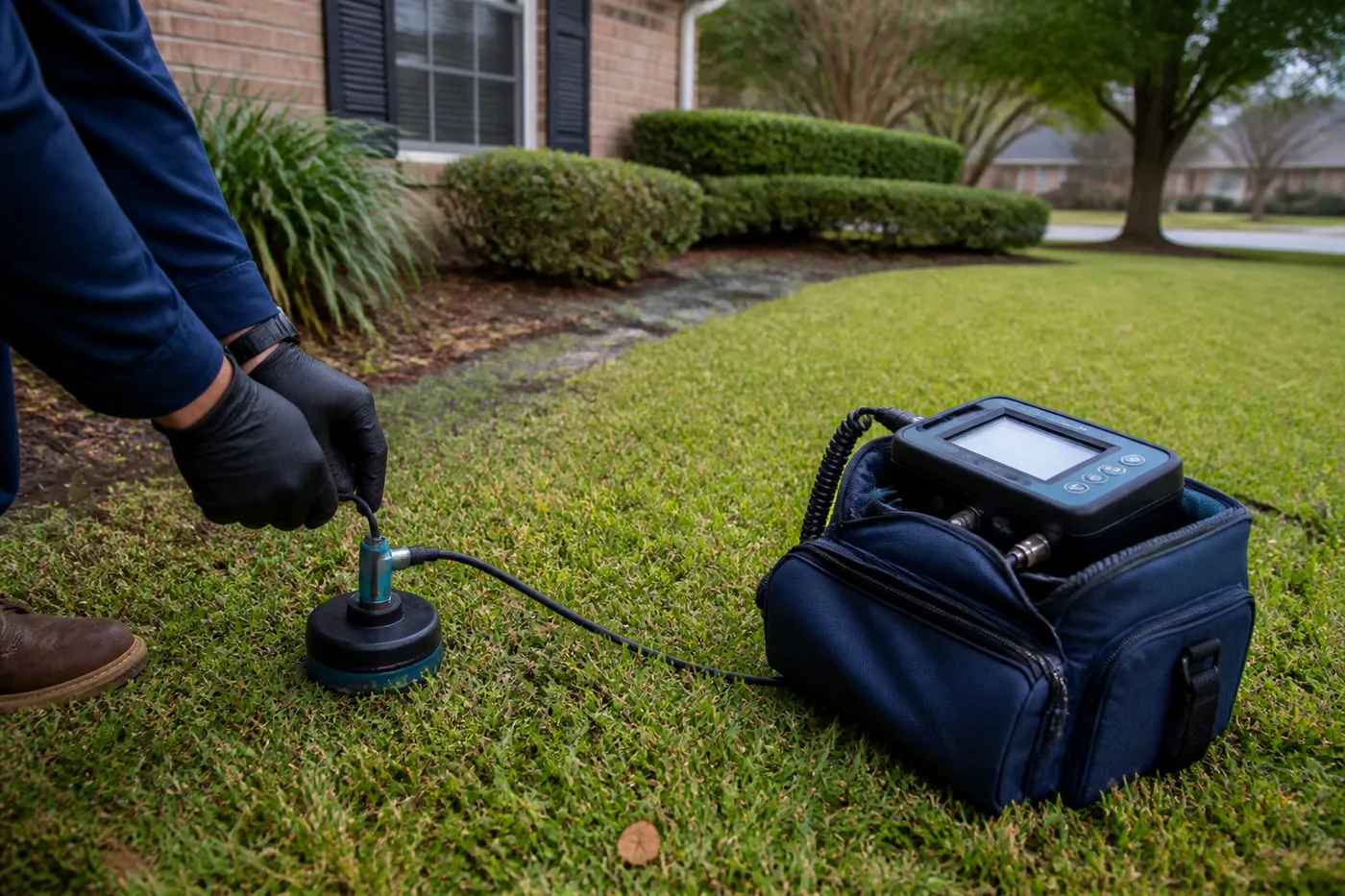
The system boundary includes the private service line, irrigation handoffs, branch feeds, meter connection, isolation valves, sleeves, and the route to the building. Testing may use meter and valve isolation, pressure testing, route tracing, ground microphones, acoustic correlation, and focused surface observation. A useful sequence starts with the reported condition, isolates the relevant zones, repeats observations where possible, and documents conditions that limit the conclusion.
Evidence expected from the Deer Park visit
The intended evidence is a reproducible signal or pressure result associated with a mapped buried line segment. The record should connect the result to the exact test condition and property area rather than presenting a tool reading without context.
Access and coordination in Deer Park
Verify the property type, municipal and utility boundary, security requirements, meter and valve maps, responsible facility contact, and shutdown window. For this service, also identify valves, meters, cleanouts, equipment, occupied rooms, pets, gates, security, tenant approvals, and any limit on water use or shutdown duration.
Repair and responsibility boundaries
the property-side boundary, pipe route, depth, material, utilities, and access must be understood before digging or repair is proposed The exact provider, jurisdiction, private-versus-utility boundary, property agreement, and repair authority must be verified for the address. Detection does not include excavation, finish removal, drying, remediation, structural work, pipe repair, or restoration unless later placed in a separate written scope.
What affects underground water leak detection cost in Deer Park
Cost commonly changes with line length, depth, material, route uncertainty, surface cover, traffic or gate access, ambient noise, and the number of buried branches. Local access, occupied-space coordination, site distance, security, utility boundaries, and additional zones can also change the scope. A proposal should state inclusions, limits, documentation, and how added testing is authorized.