Houston service guide
When this Houston detection scope may fit
Pool & Spa Leak Detection in Houston is intended to separate normal evaporation from leaks in a pool shell, fitting, equipment pad, or circulation line. The scope may fit when water level falls faster than expected, autofill use increases, air enters the system, decking stays wet, or a spa and pool do not hold level consistently.
The city includes historic homes, slab-on-grade subdivisions, townhomes, high-rises, apartments, retail buildings, warehouses, and major institutional campuses. In this property mix, the request should identify the building type, meter arrangement, suspected route, affected zone, prior work, and who controls access.
Local conditions that can change the test sequence
Long service routes, remodeled plumbing, shared building systems, mature landscaping, and flood-prone ground conditions can complicate source isolation. These conditions do not prove a leak, but they affect which competing sources must be removed and where instruments can produce useful readings.
How pool & spa leak detection is approached
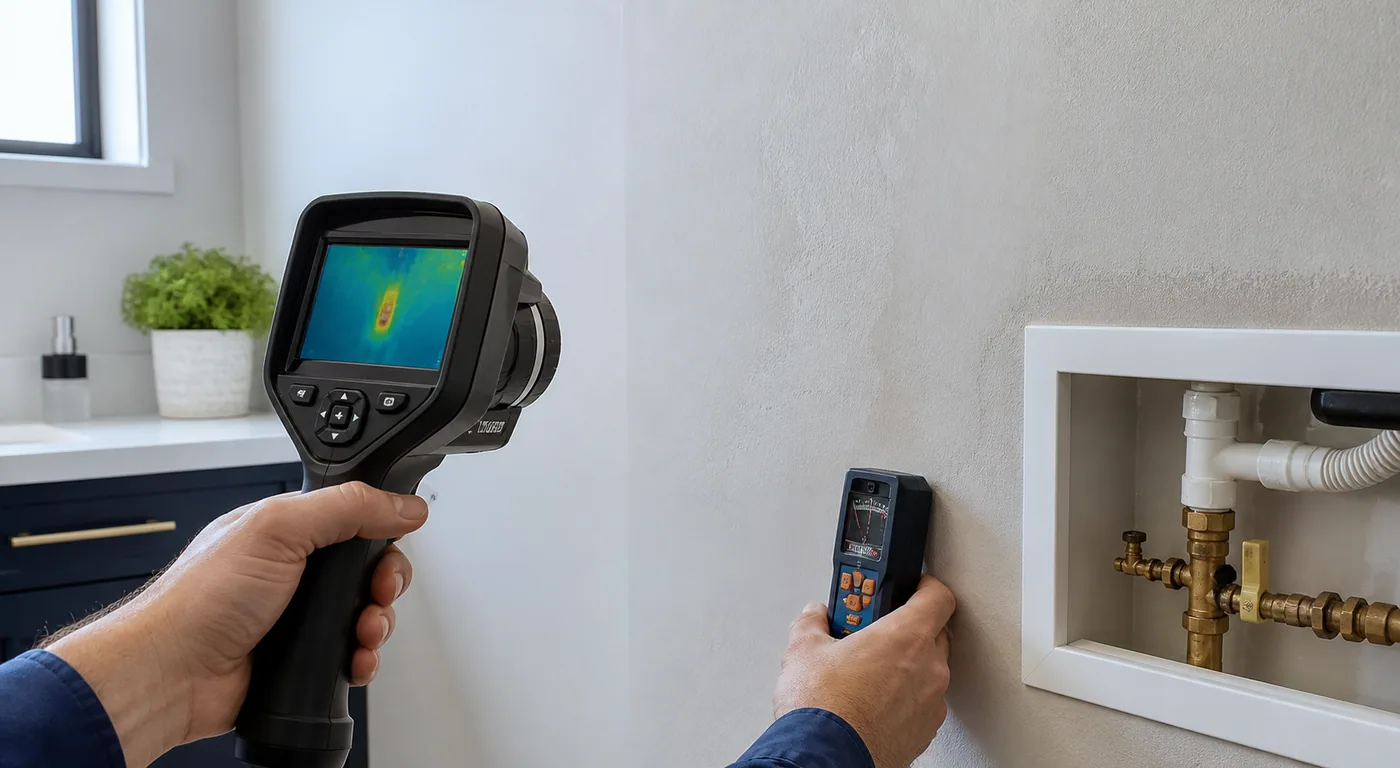
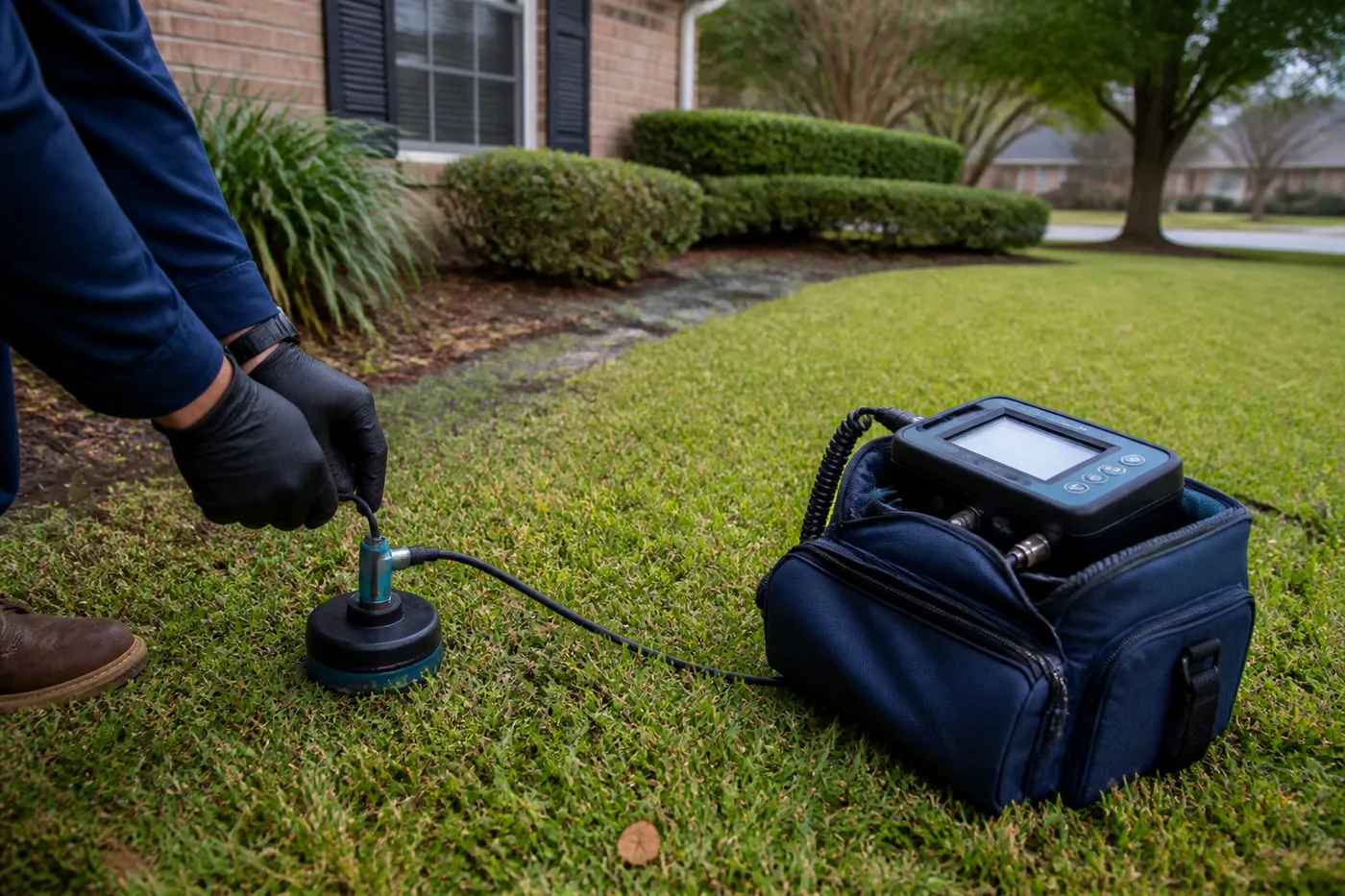
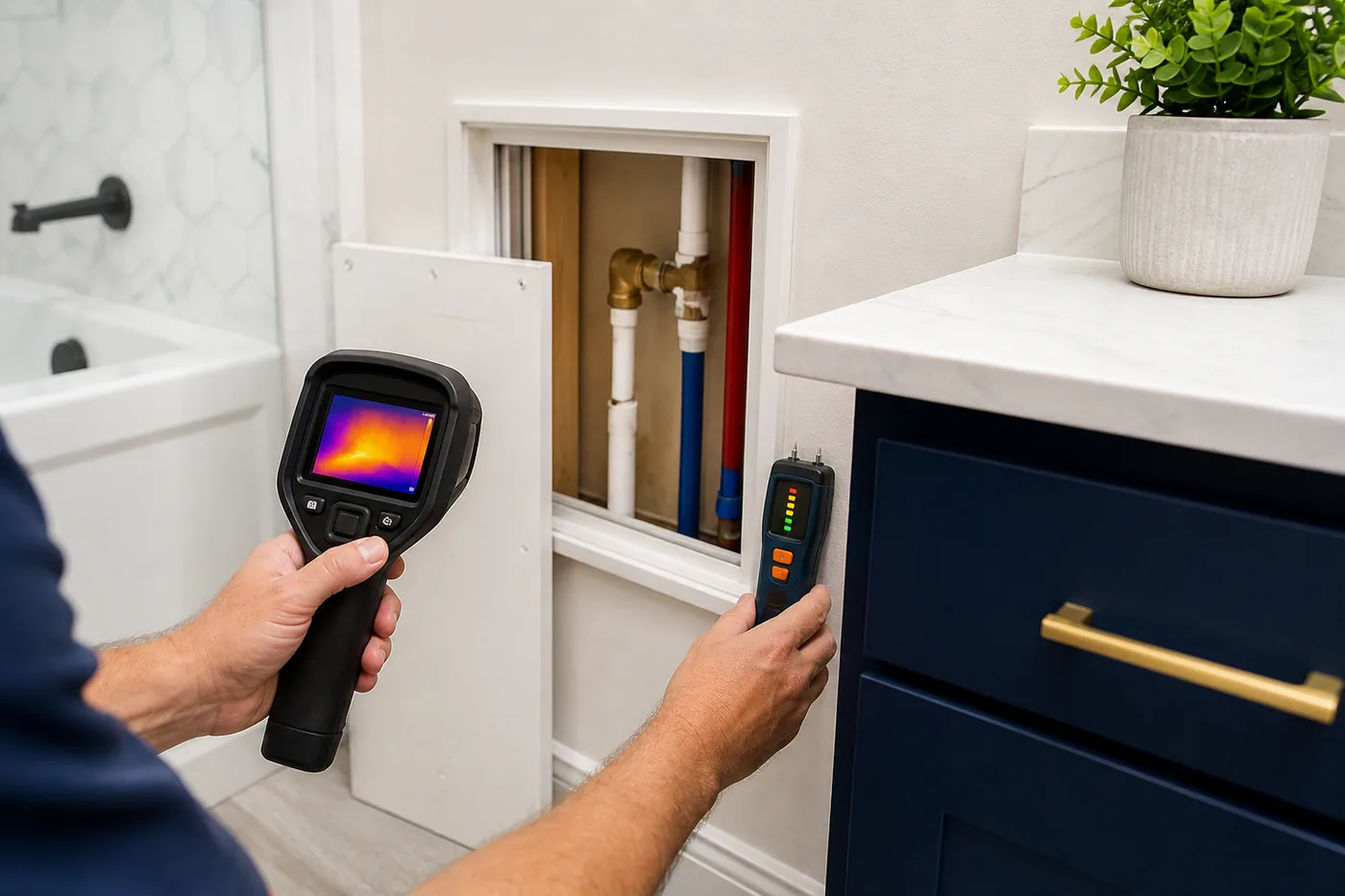
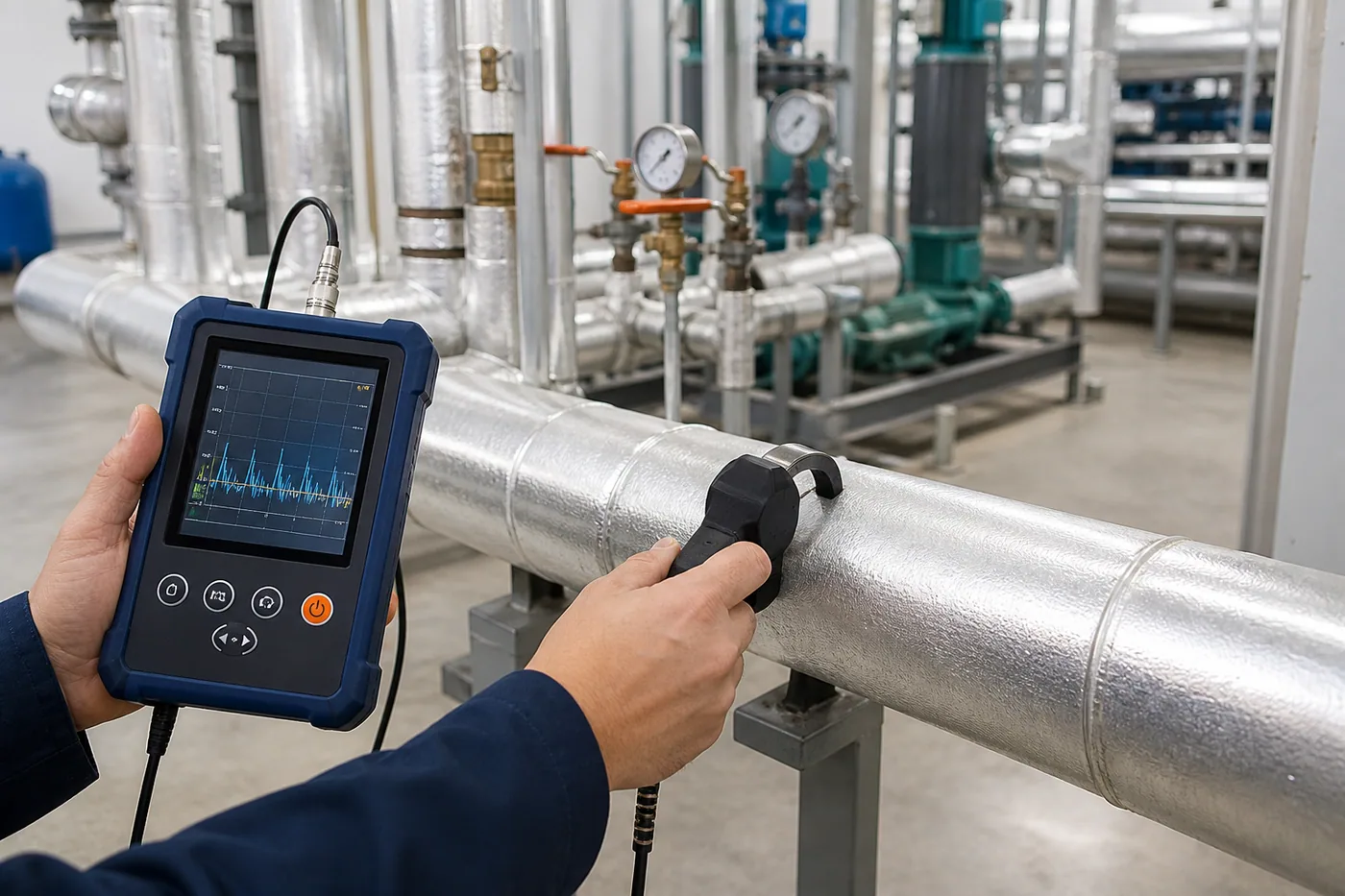
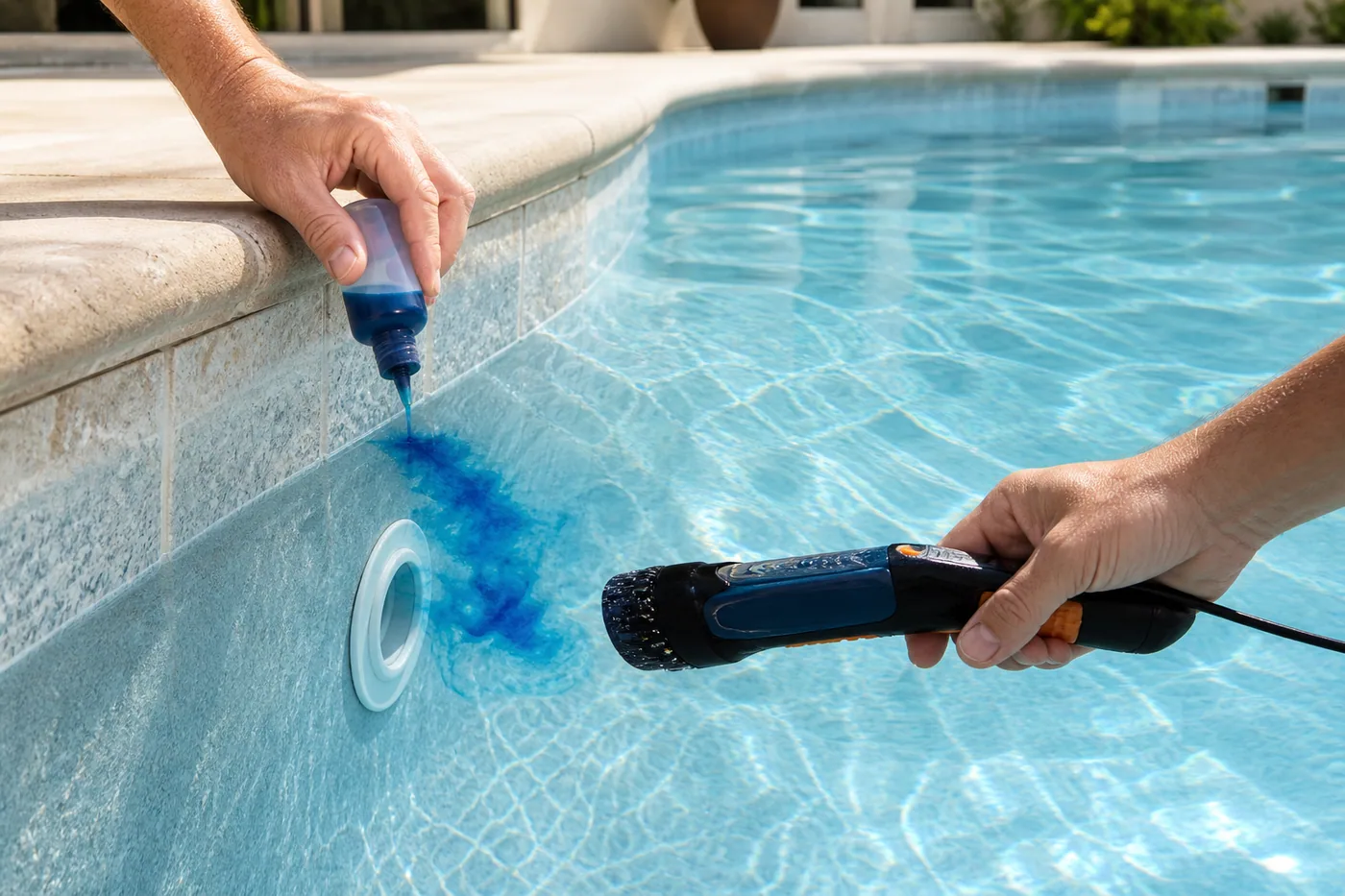
The system boundary includes the vessel shell, skimmers, returns, lights, drains, attached spa, equipment pad, suction and return plumbing, and water features. Testing may use static water-level observation, bucket comparison, dye testing, equipment isolation, pressure testing, listening, and targeted underwater inspection. A useful sequence starts with the reported condition, isolates the relevant zones, repeats observations where possible, and documents conditions that limit the conclusion.
Evidence expected from the Houston visit
The intended evidence is a measurable loss pattern or isolated component that changes when a specific line, fitting, feature, or circulation state is tested. The record should connect the result to the exact test condition and property area rather than presenting a tool reading without context.
Access and coordination in Houston
Confirm the exact address, parking, gate or loading access, equipment location, tenant coordination, and the utility or municipal boundary before testing. For this service, also identify valves, meters, cleanouts, equipment, occupied rooms, pets, gates, security, tenant approvals, and any limit on water use or shutdown duration.
Repair and responsibility boundaries
wind, heat, splash-out, backwashing, autofill behavior, and attached water features must be separated from an active leak The exact provider, jurisdiction, private-versus-utility boundary, property agreement, and repair authority must be verified for the address. Detection does not include excavation, finish removal, drying, remediation, structural work, pipe repair, or restoration unless later placed in a separate written scope.
What affects pool & spa leak detection cost in Houston
Cost commonly changes with pool size, attached features, line count, access to equipment, water clarity, operating condition, and the number of tests needed to isolate the loss. Local access, occupied-space coordination, site distance, security, utility boundaries, and additional zones can also change the scope. A proposal should state inclusions, limits, documentation, and how added testing is authorized.